Jackson
Mount Washington Valley — the covered bridge, the grand inns, ski-country estates, and the four-season mountain life that surrounds them.
On the character ofJackson.
A classic White Mountains village.
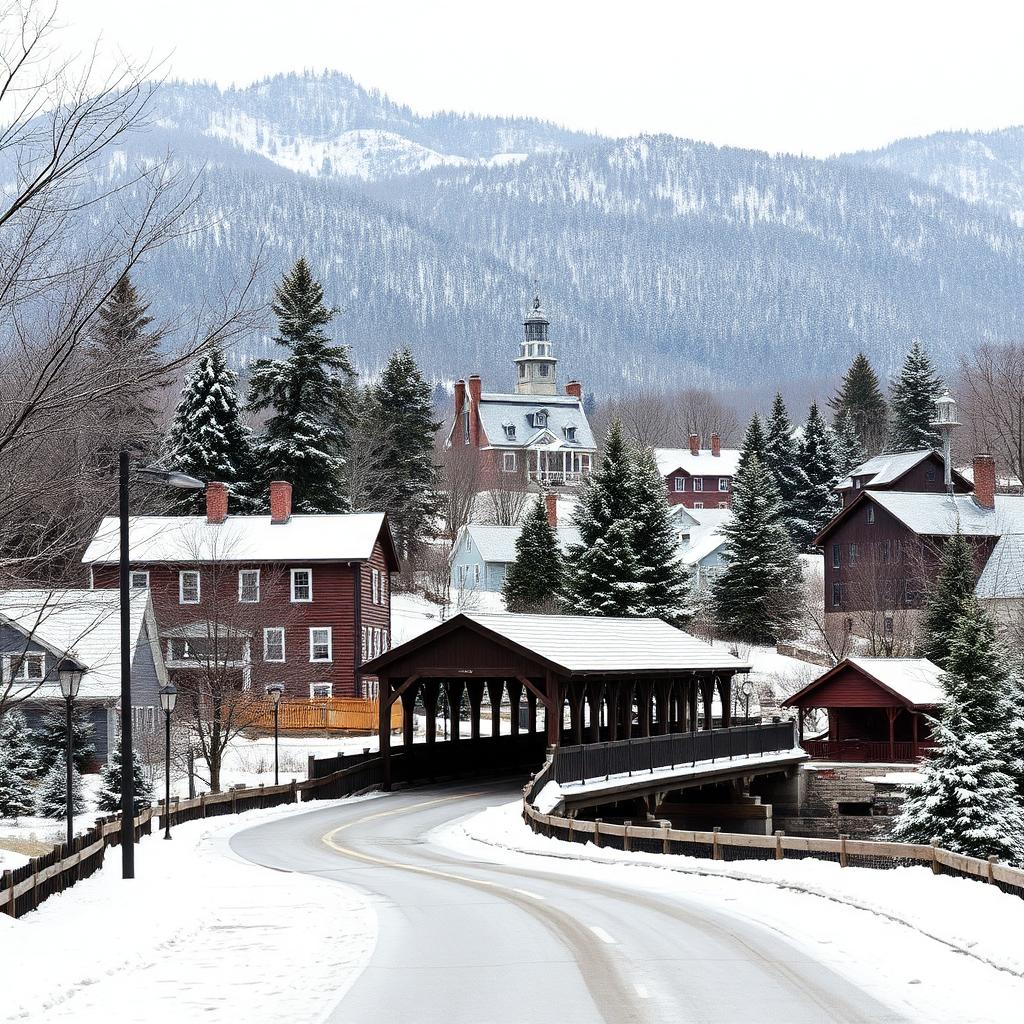
Jackson is the White Mountains village that most closely resembles the postcard. Entered by way of its red covered bridge, the town holds a compact core of grand inns, a nineteenth-century church on the green, and a small collection of shops that have been there long enough to belong to the place. Above and around it sit the ski trails of Black Mountain and, close by, the Wildcat and Attitash mountains that draw the region's winter traffic.
The housing character is genuinely four-season. Chalet-scaled ski homes on the mountain shoulders, substantial mountain estates on long private drives, and a limited inventory of historic inn-scale properties that come to market rarely. Buyers here are typically choosing a life — skiing, hiking, walking to the tavern in December — more than they are choosing a house.
The market moves on its own calendar. Winter and early autumn decide most of the year's activity; the rest of the year rewards owners who wait for the right property in the right notch.
What defines Jackson.
Mount Washington Valley; the Wildcat River, surrounding notches, and the Presidential Range above.
- Covered bridge, grand inns, and a compact classic village
- Ski-country estates and four-season mountain homes
- The Wildcat, Black, and Attitash mountains nearby
- A market that moves with the mountain calendar
Genuine depth in Jackson sits inside a broader practice — five New Hampshire regions covered with the same seriousness, and, when the right home lives elsewhere, a personally vetted network that reaches it.
A private conversationabout Jackson.
Introductions in Jackson — and across the Mountains & North Country — are made by appointment and in confidence.